Isotonic bridging (hip bridge)
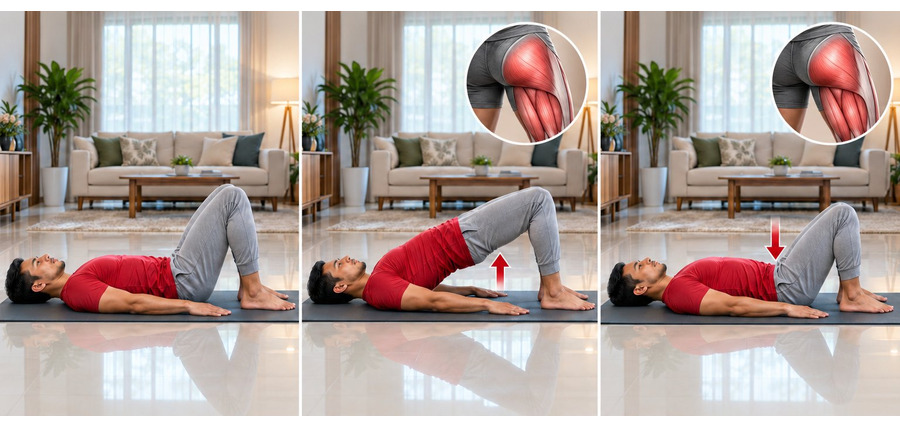
Bridging strengthens your buttock (gluteal) and hamstring muscles and your trunk. Strong hips support sitting balance, transfers, standing and walking. Isotonic means the muscles work while they move: lifting up and lowering down slowly with control.
- Suggested dose
- 2–3 sets × 10 · 3x/week
- Time
- 8 min
- Suitable injury levels
- T7-T12, L1-S5
- ASIA grade
- C, D
- Equipment
- Mat
- Help needed
- You can usually do this on your own.
How to do it
- Lie on your back on a mat with your knees bent and feet flat, hip-width apart. Arms rest by your sides.
- Push through your heels and lift your hips until your shoulders, hips and knees are in one straight line. Squeeze your buttocks.
- Lower your hips slowly back to the mat, keeping control all the way down.
- Repeat 10 times for 2 to 3 sets, resting between sets.
Safety notes
Do not arch your lower back or push higher than a straight line. Stop if you feel pain in your back, hips or knees, or any new numbness or dizziness. Ask your coach before starting, especially if you have low blood pressure or little control of your legs.
Related exercises
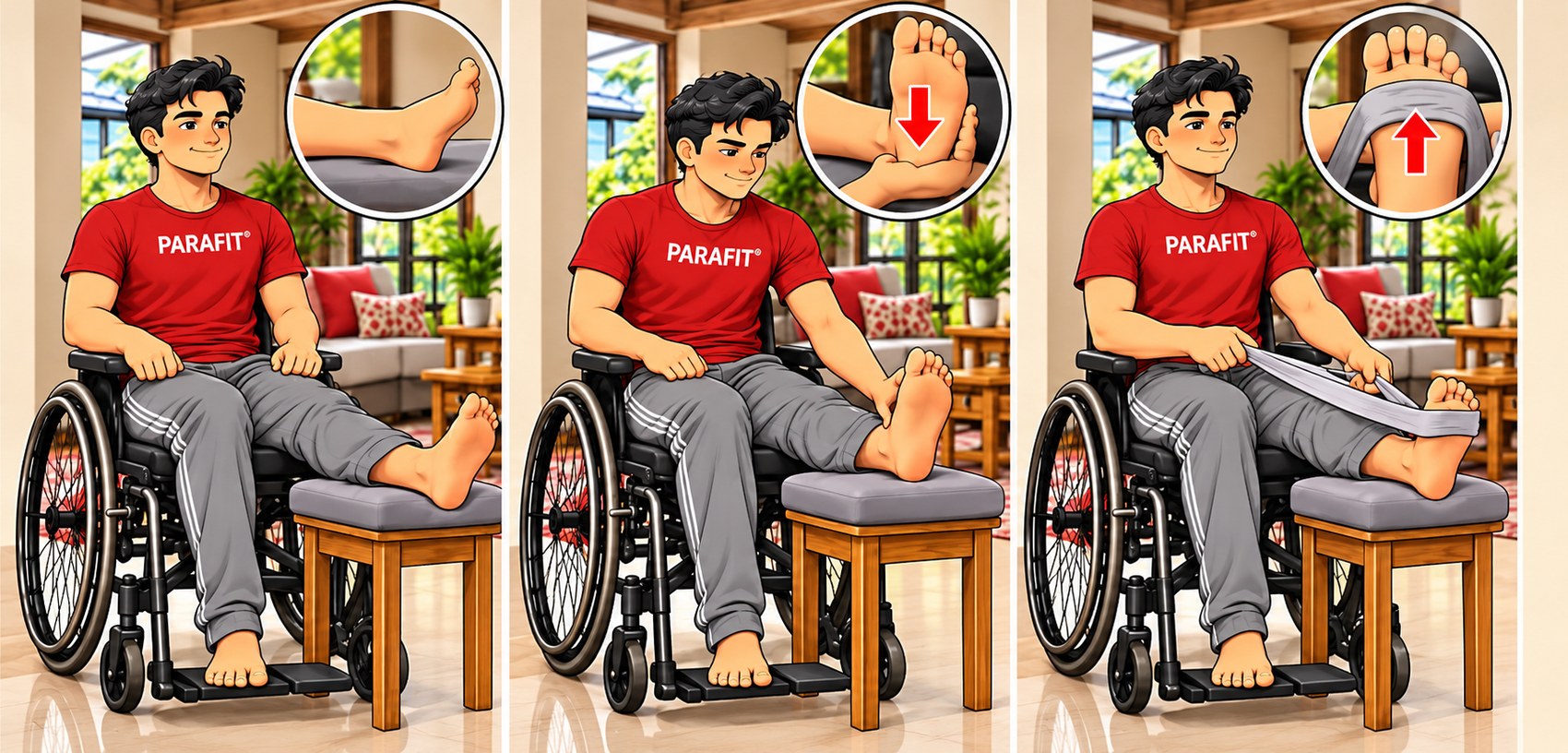 Isometric ankle push and pull
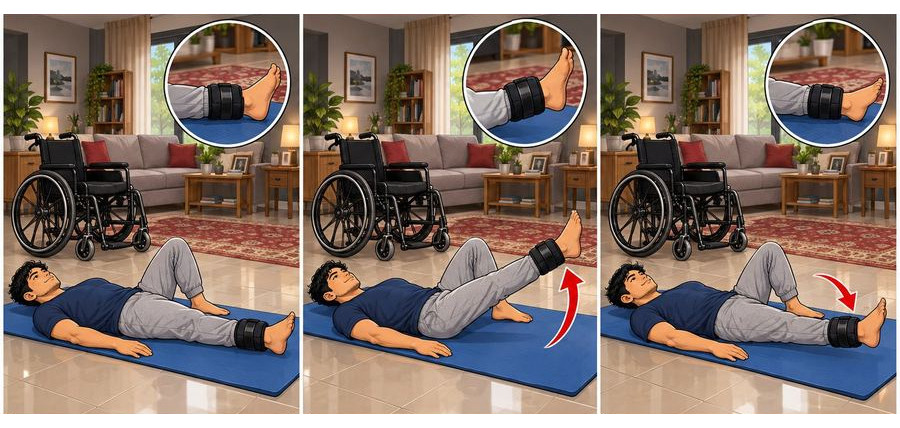 Ankle-weight straight leg raise
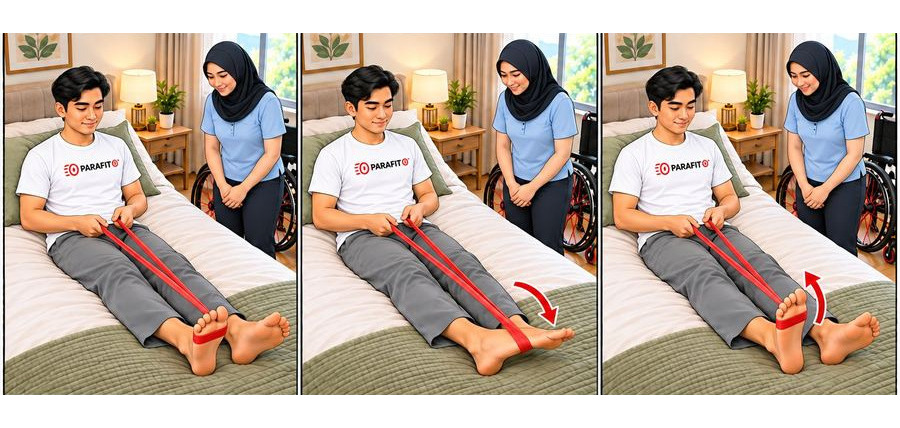 Band ankle pumps (point and flex against a band)
 Seated hip abduction with band
 Marching in place at parallel bars
 Step-ups onto a low step (with rail)
Get a plan matched to your injury
Create a free SCIHAT account. Answer four quick questions and get exercises that fit your level, track your sessions and share progress with your coach.
General information only. It does not replace assessment by a qualified physiotherapist or your treating team. Stop if you feel pain, dizziness or anything unusual, and exercise within your own safe limits.
Created by: Noor Hafifi Noorhisham, Universiti Kebangsaan Malaysia, SCIHAT.